How Dialogownia Became a Social Intranet
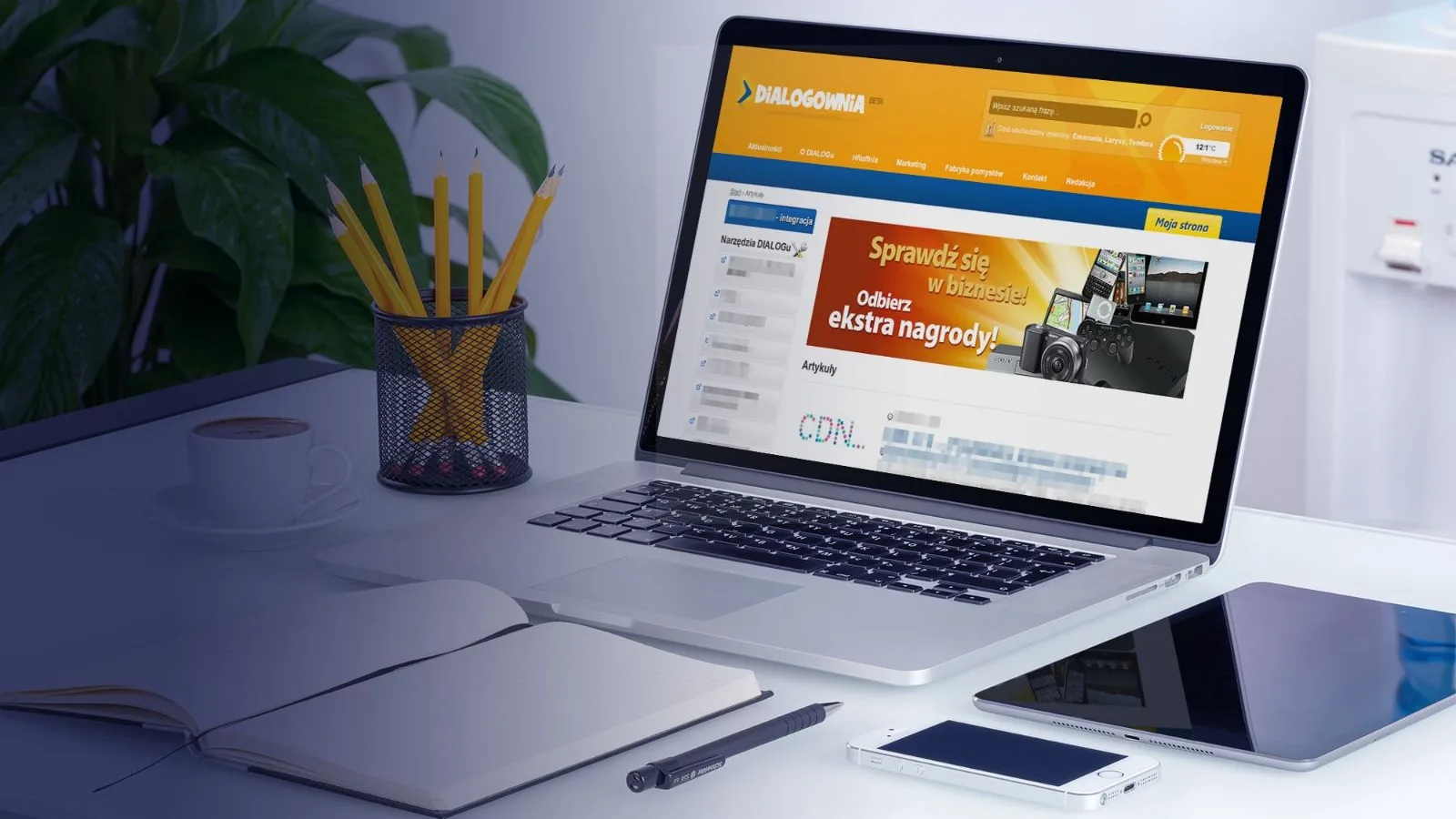
Telefonia Dialog replaced a simple news site with Dialogownia — a Drupal intranet where more than a thousand people across many towns could propose ideas, talk, and find the colleagues they needed.
The Challenge
Telefonia Dialog employed more than a thousand people, working in towns spread across the country. The intranet they had was a Joomla site that mostly published news. It did not connect to the tools staff already used, and it gave people very little reason to take part.
The company needed an intranet that could:
- Sign people in with the account they already had, and show role and workplace without a second password
- Reach employees in different towns with news and tools that still respected who should see what
- Keep every article from the old intranet, while sorting that library into a structure people could browse
- Give employees a way to propose and debate improvements, instead of only reading announcements
The Solution
Droptica designed and built Dialogownia on Drupal. Dialog already ran other sites on Drupal and wanted that same room to grow. The aim was straightforward: a fresher intranet, and features that would pull people into the life of the company.
Mock-ups before a single screen was built
Most of the interface was sketched first. The visual design followed those mock-ups and was aligned with Dialog’s brand, so the intranet looked like the company — not like a generic template dropped on top of the old news site.
The old library, moved and tidied
Nothing published on the previous intranet was left behind. A dedicated migration carried articles into a new set of categories, and Dialog used the move to clear out what was out of date. Only after the structure and the look were settled did development start, beginning with content types and the data stored on each person.
A profile that knew the organisation
People signed in through Active Directory. The profile then showed their role and where they worked, and from there they could open the list of colleagues in the same department or even the same room — useful when the person you need is away. Each employee could also arrange My page, picking the blocks they cared about and putting them in their own order. In a company this busy, a fixed homepage would have buried the tools people actually opened.
A place to talk, not only to read
Idea factory was a board for proposed changes. Anyone could post an idea. Colleagues commented and voted, and rankings showed who was most active — split between new ideas and ones already put into practice — as well as who joined the discussion.
Commenting on articles was new. It was tied to email, so a person who joined a thread heard about later replies on that same article. Under each article, people could also mark it as liked; the article showed who had, and each profile listed the pieces that person had saved this way.
Editors could run surveys with as many questions as they needed, then read a summary of the answers. Where a story was only meant for certain jobs or certain towns, a purpose-built access rule kept it there. Dialogownia also had to sit beside systems the company already ran — the staff directory, the phone book, and the personnel system — so it worked as a front door, not another island.
The Results
The launch showed up in how people used the site:
- Employees wrote and commented, rather than only receiving news
- Ideas stayed visible, with votes and a record of which ones had been taken up
- One login and one profile linked people to their department, their town, and the tools they used most
- A distinction at INTERNALE POLAND 2011, in the large-company category for best intranet
Key Takeaway
Dialog did not need a louder noticeboard. It needed an intranet people would open because their colleagues, their ideas, and their own shortcuts were there. Dialogownia was a custom Drupal intranet built by Droptica — the team behind Open Intranet — and the pattern still holds: sign-in people already trust, a home page they can shape, and a public place to propose what should change.
Find out what Open Intranet would cost you
Tell us how many people will use your intranet and where you want to host it. You get a written quote by email within two business days, with no sales call.