How to build an intranet business case leadership will fund
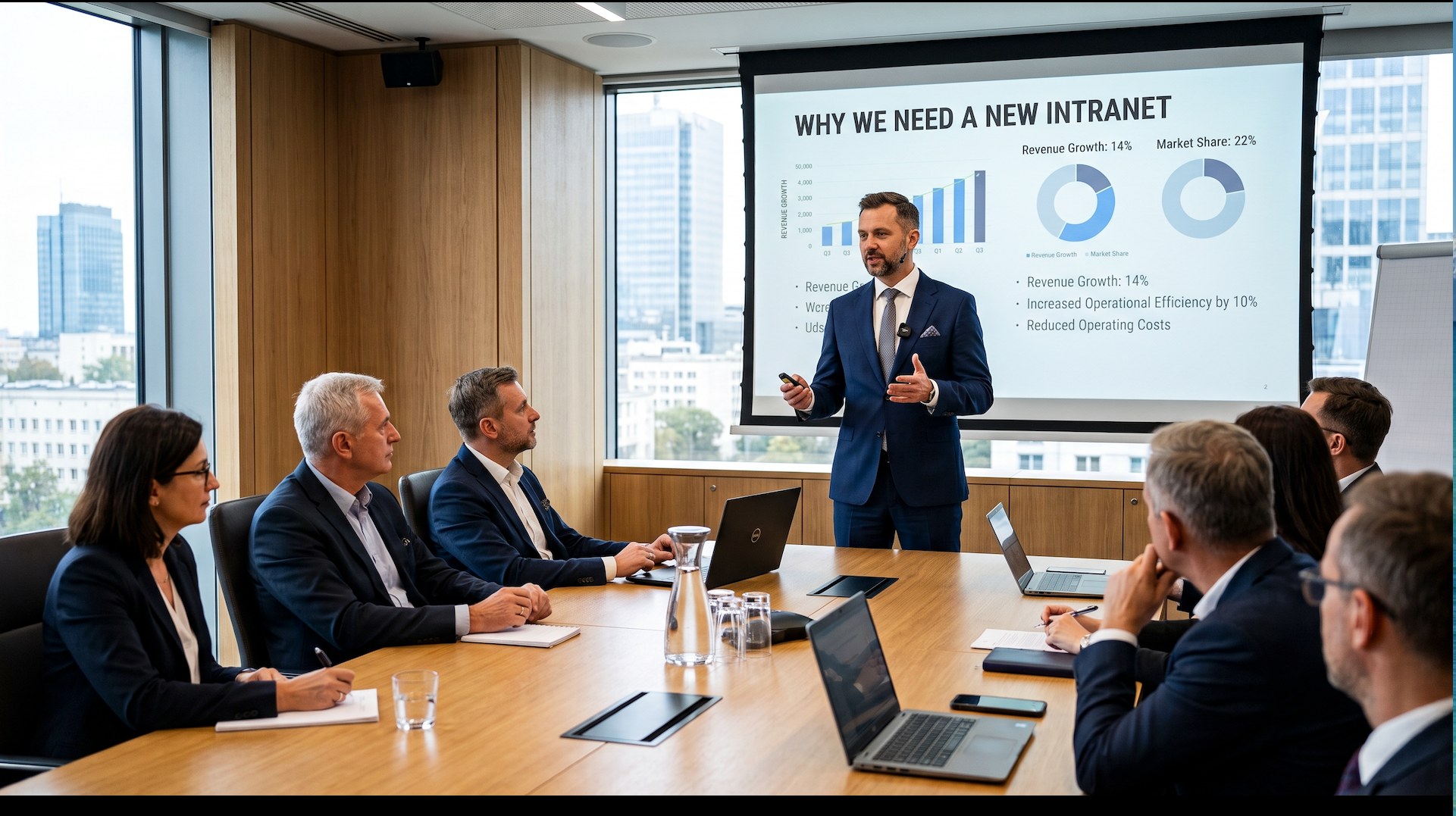
Internal comms and IT leaders often know an intranet upgrade is overdue, but knowing it and funding it are two different things. This article gives you a practical framework to turn a gut feeling into an intranet business case executives will approve. You will learn how to tie the project to digital workplace strategy, translate employee experience into numbers budgets teams respect, and package the whole argument into a one-page pitch that wins sponsorship. The goal is simple: move from “we need a better intranet” to a signed budget line.
In this article:
- What triggers the need for a new or rebuilt intranet?
- How do you frame communication, collaboration, and knowledge management as measurable outcomes?
- Which baseline metrics should you capture before you start?
- How do you estimate the cost of inaction?
- How do you structure a one-page sponsor pitch?
- How do you connect the intranet to wider digital workplace strategy?
What triggers the need for a new or rebuilt intranet?
Every funded project starts with a trigger that leadership can recognize. Before you write a single line of your pitch, name the specific event or pressure that makes this the right moment. The strongest cases point to a change that already has executive attention.
Common triggers include:
- Rapid headcount growth or a merger that fragments how people find information.
- A legacy platform reaching end of life or losing vendor support.
- Remote and hybrid work exposing gaps in a communication and collaboration setup that was built for the office.
- Repeated complaints that employees cannot find documents, policies, or the right contact.
- Security and compliance pressure, including ISO 27001 requirements, pushing toward a controlled system.
Pick the one or two triggers that match a priority leadership already cares about. A merger that stalls collaboration or a platform that is about to go unsupported gives your request urgency that a general “it feels dated” argument never will.
How do you frame communication, collaboration, and knowledge management as measurable outcomes?
Executives fund outcomes, not features. The mistake many internal teams make is describing what the intranet does instead of what changes for the business. Translate each capability into a number a budget owner recognizes.
Here is how to reframe the three pillars:
- Turn internal communication into reach, read rates, and a reduction in duplicate email blasts.
- Frame collaboration as time saved locating people, files, and project spaces.
- Position knowledge management as fewer repeated questions and faster onboarding for new hires.
- Map each outcome to a business metric leadership already tracks, such as productivity hours or attrition.
- Connect employee experience gains to retention and engagement rather than soft sentiment alone.
The scale of the problem is well documented: McKinsey Global Institute estimates that knowledge workers spend around 19% of their working week — nearly a full day — searching for and gathering information. When you say “employees waste a day a week searching for information,” a finance leader hears salary hours. When you say “onboarding takes two weeks longer than it should,” an HR leader hears time to productivity. That is the language your case needs to speak.
Which baseline metrics should you capture before you start?
You cannot prove improvement without a starting point, and you cannot justify spend without a baseline. Capture these numbers before the project begins so you can show progress later and defend the investment now.
Baseline metrics worth collecting:
- Average time employees spend searching for information each week.
- Current email volume and open rates for internal announcements.
- Onboarding ramp time and the number of support tickets tied to finding resources.
- Adoption and usage data from the existing intranet or shared drives.
- Employee sentiment from a short pulse survey on finding and sharing information.
A five-question pulse survey and a quick pull of usage logs take a few days and give you hard evidence. These same numbers become your before-and-after story once the new platform is live, which makes them useful long after the budget is approved.
How do you estimate the cost of inaction?
The most persuasive part of any business case is often the cost of doing nothing. Leadership weighs your request against the option of keeping things as they are, so make that option expensive and visible.
Build the cost of inaction like this:
- Multiply hours lost to searching by the average salary across affected teams to reach an annual figure.
- Add the cost of duplicated work and decisions made on outdated information.
- Factor in slower onboarding and its effect on time to productivity.
- Include the rising maintenance and security risk of keeping an aging platform running.
- Present inaction as a recurring yearly cost, not a one-time inconvenience.
The framing matters. A one-time inconvenience is easy to defer. A recurring six-figure drain that grows every year is a problem leadership will want to solve now. When the cost of inaction is larger than the investment you are asking for, the decision becomes straightforward.
How do you structure a one-page sponsor pitch?
Executives read one page. If your case runs longer, the decision gets pushed to a meeting that may never happen. Fit the whole argument onto a single page a sponsor can scan in two minutes and forward with confidence.
Structure the page in five parts:
- Open with the trigger and the business problem in two sentences.
- State the recommended approach, including why an open source platform on Drupal 11 keeps control and cost in check.
- Show baseline metrics beside target outcomes in a simple before-and-after table.
- Present the cost of inaction next to the estimated investment for a direct comparison.
- Close with a clear ask: sponsor name, budget range, and the first decision you need.
The before-and-after table is where the case becomes tangible. For example:
| Metric | Today | Target after 12 months |
|---|---|---|
| Time spent searching for information | 6 h / week per employee | Under 3 h / week |
| Announcement read rate | 34% | 70%+ with must-read tracking |
| Onboarding ramp time | 8 weeks | 6 weeks |
| Internal “where do I find X” tickets | 120 / month | Under 40 / month |
That final line of the pitch is what separates a memo from a pitch. Do not end with “let me know your thoughts.” End with a specific request, such as “I am asking you to sponsor this and approve a discovery budget of X by the end of the quarter.” Make the yes easy to give.
How do you connect the intranet to wider digital workplace strategy?
A standalone intranet is a hard sell. An intranet that advances a strategy leadership has already endorsed is an easy one. Position the project as a piece of the digital workplace rather than a separate initiative competing for funds.
Make these connections explicit:
- Show how the intranet becomes the entry point to tools employees already use.
- Position it as the governed home for content, security, and access control.
- Explain how an open source foundation avoids vendor lock-in and supports long-term integration.
- Align the project with strategic goals leadership has already committed to.
- Frame the intranet as infrastructure that compounds in value as more workflows connect to it.
An open source foundation is a strong strategic argument in its own right. It keeps ownership of the platform inside the organization, avoids repeat licensing surprises, and lets the intranet grow as new systems come online. That is the difference between a cost that ends and an asset that keeps returning value.
Ready to start?
If your case is coming together, the next step is seeing what the platform behind it looks like. Open Intranet, built on Drupal 11 by Droptica, maps directly to the outcomes described here: measurable communication, faster access to knowledge, governed security, and no vendor lock-in. Reach out for a walkthrough of the platform so your team can point to a concrete option while preparing the pitch, and turn your intranet business case from a proposal into an approved project.